
To start, I want to be clear that this is how I process my wild game meat for me and my family to eat. You should always follow best practices for keeping your meat clean and safe.
Around 25 years ago, I started boning out all of my big game animals on the mountain. I am a strong believer that getting the meat off the bone within hours of harvesting an animal greatly enhances the flavor of the meat. I have had zero problems with meat tasting gamey, even with animals that are less than rosy-smelling on the outside. I believe this is from getting the meat cooled quickly and removing a lot of the blood in the meat within hours of the animal going down.

Deer meat ready for packing out from my 2025 DIY Muzzleloader Deer Hunt.
I work hard to keep the meat as clean as possible on the mountain and place it in game bags. Once I get home or to a vehicle, I will get the meat in coolers with ice on it until I can get to rinsing and trimming the meat. Usually, the following day after returning home, I pull out all of the meat and rinse and trim off the nasty stuff that shouldn't be eaten. I then divide up the meat into scent-free trash bags. The meat in the lower legs and other gristly pieces I place in a bag, which I will eventually grind up into jerky. I cut up steaks from the backstraps, tenderlions and any other pieces I would like for steak. I place steak meat into gallon freezer bags and place Worcestershire sauce in the bags with the steaks. I will freeze these bags of steaks and when the time comes to pull one out of the freezer to place in the fridge to thaw, it is already marinating as it thaws.
All other meat that isn't steak-worthy or jerky-worthy I place into trashbags that will be ground into burger.
Once I have the meat divided up, I get as much air out of the trash bags as possible, seal off the bag and put the bags in my chest freezer.
Within the next six months, I will pull bags of meat out to grind in batches of 30 pounds or so for burger and 10 pounds for jerky. Because the meat can have larger pockets of air in the bags I try to grind it within six months to prevent the meat from getting freezer burns.
At my local butcher, I will order ten bags of beef fat in three pound shrink wrapped bags. I keep these in the chest freezer as well until I'm ready to grind up some burger.
When I am ready to grind up some meat, I set out the amount I want to grind in a cooler. I do this a few days before I want to grind the meat. When I go to grind the meat, I want it to still be partially frozen but not so frozen that I can't get my large knife to cut through the meat.
I also wait until five or so hours away from when I will be grinding the meat to get the three-pound bags of beef fat out and I will put it in the cooler as well. The beef fat thaws a lot quicker and I have found that you want the beef fat to be pretty solid when you go to grind it. If the beef fat isn't cold and solid, it gums up the grinder. Not something I like. I generally use around one three-pound bag of beef fat for every 30 pounds of game meat I plan to grind into burger.
With partially frozen meat and beef fat, it gives a nice crisp grind and also keeps the auger cooled. Meat that isn't this cold will allow the auger to get really hot and meat will stick to it and get baked on it. You also run a risk of getting more of a pink slime grind of pureed meat. The most important thing I have learned from grinding my own meat is having meat that is partially frozen when you grind it.
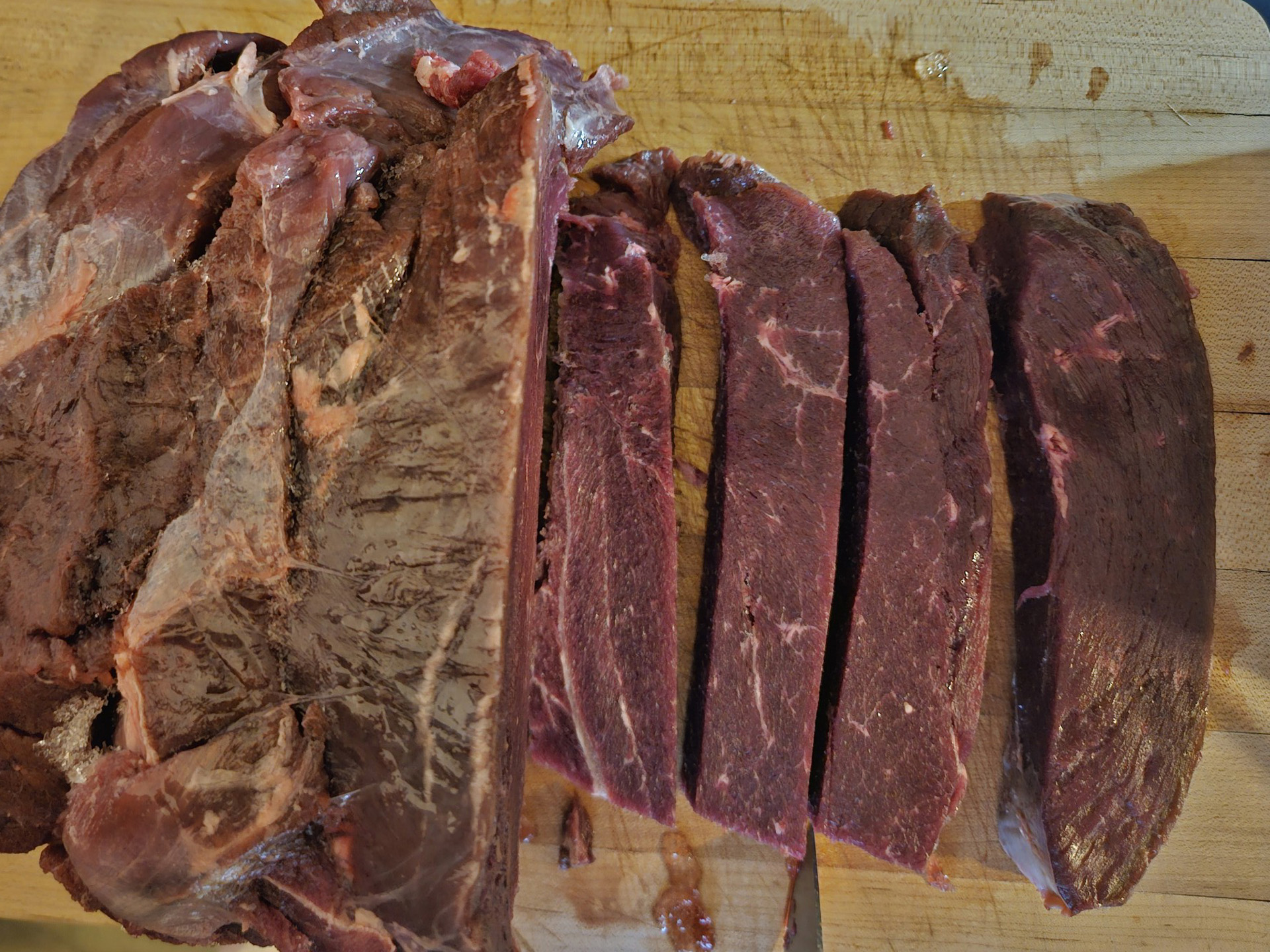
This meat is still partially frozen but thawed enough that I can slice it into strips to run through the coarse grind.
Time for grinding
After I have all my gear out ready to grind the meat the first step is cutting the semi-frozen meat into strips of meat that I can feed into the grinder with the 10mm course grinding disc. I will cut a few strips and feed them into the grinder as I operate the grinder with a foot pedal on the floor. I will continue to cut a few strips and grind until I finish a course grind on all of the meat. If I am making burger, I will then cut strips of the beef fat and feed it into the grinder.
Once all the meat and fat is ground, I mix it up in the LEM meat lug and then feed it back through the grinder with the smaller 4.5mm grinding disc.
For burger, I install the stuffing disc with the stuffing tube.
I then feed the ground burger back through the grinder, using it to stuff the meat bags that I slide over the stuffing tube. This step takes a little practice to figure out how hard you should grip the stuffing tube through the bag to create just the right amount of resistance to stuff the meat bags but not too tight to remove any air pockets in the bags. This process takes a little practice. As with the other grinding processes, having the foot pedal power option is essential to being able to do this by yourself.
After I have a tube stuffed, I twist the end and run it through the taping sealer and this bag is ready for the freezer.
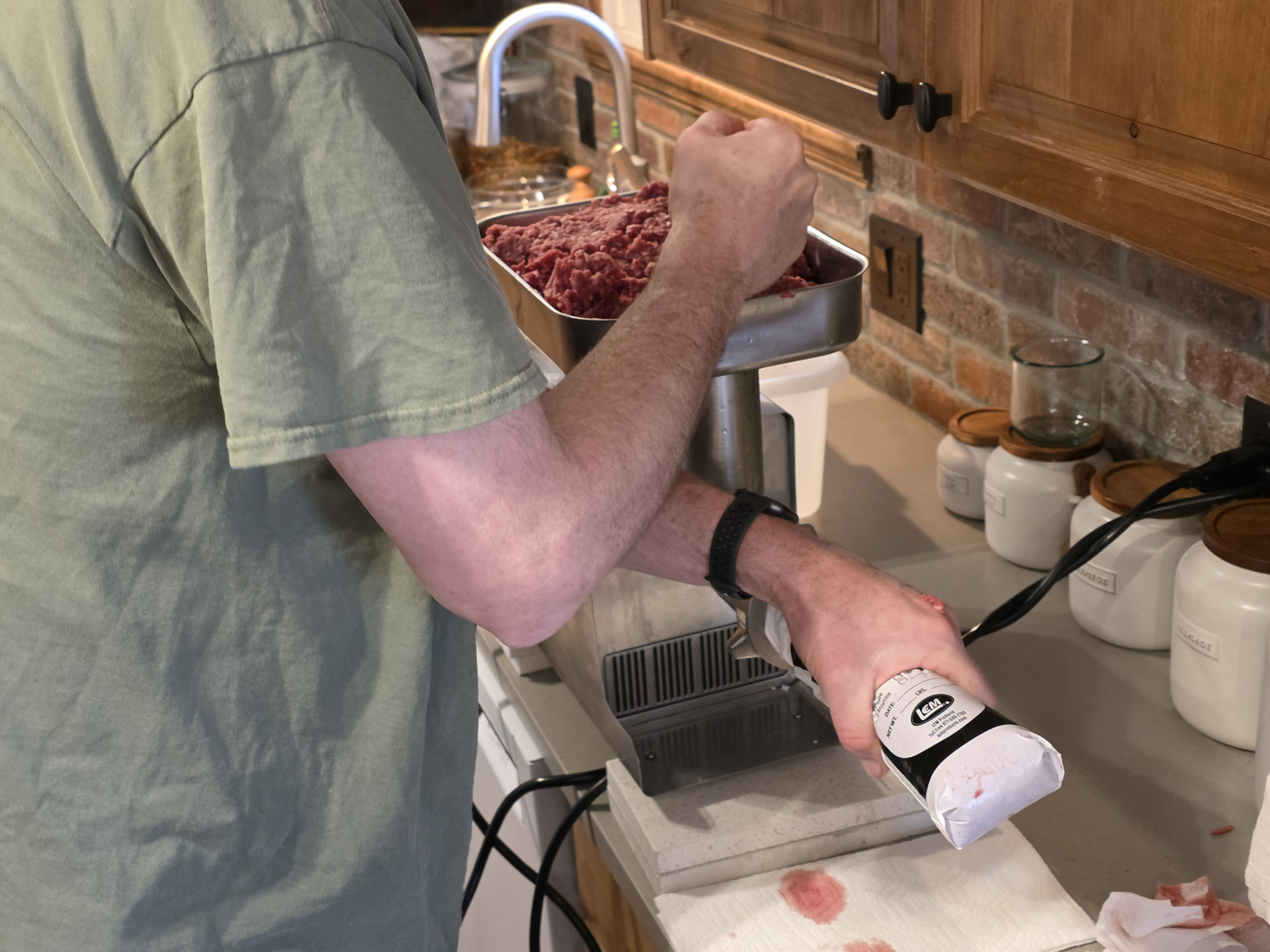
Yes, my arms are crossed. This style of crossing my arms to stuff the bags with burger meat is what works best for me. You may also notice that I have marble slabs under my LEM grinder. I do this to raise the grinder up about two inches so that the LEM meat lugs will fit under the exit port of the grinder to catch the meat. LEM should add some spacers with their grinder to work with their meat lugs.
Jerky
For jerky, I will do the course and fine grinds like with the burger instructions above, except without any beef fat added.
After grinding the meat, I will mix up the Hi Mountain jerky mix with water in a large bowl. Once this is mixed, I pour it in with the meat in a LEM meat lug and mix it up with my hands. After it is mixed in well, I place plastic wrap over the lug and place it in a fridge overnight to marinate.
After the jerky meat has been marinating overnight, I then use my small dehydrators and Jerky Gun to squeeze out jerky strips onto the dehydrator trays.
On my first batch, I will watch the drying process frequently and adjust my drying time accordingly.
I like to flip the jerky once and reverse the order of the trays at a midpoint in the drying cycle. I use a smart plug to turn off my dehydrators at the time I think is necessary to keep from over-drying the meat.
Essential gear for grinding burger
- LEM Products BigBite #12 Meat Grinder, 0.75 HP (this is the size I have. I wouldn't recommend going any smaller) *
- LEM Products Meat Grinder Foot Switch*
- #12 4.5MMSS grinding disc (used with a blade). My LEM grinder came with this disc.*
- #12 10MMSS grinding disc (used with a blade). My LEM grinder came with this disc.*
- #12 SS stuffing disc (used without a blade). My LEM grinder came with this disc.
- #12 SizeTube Horn Funnel for Filling Meat Bags Straight from Your Meat Grinder
- LEM Products 2 lb. Wild Game Bags. I like the 2 lb. bag size but you can also get 1 lb. bags as well.
- LEM Products Ground Meat Packaging System (tapes the plastic bags shut)
- LEM Products Heavy Duty Meat Lug. I recommend getting at least three of these tubs for working with the ground meat.*
- Cutting Board*
- Large knife*
Additional items needed for jerky
- LEM Products Jerky Gun
- Food Dehydrator
- Hi Mountain Jerky Seasoning. Our family likes the Original Blend flavor. One package for 10 pounds of ground meat
- A smart plug can also be handy to control how long the jerky dries
- * You will also need all of the items listed with a * from the burger grinding section as well
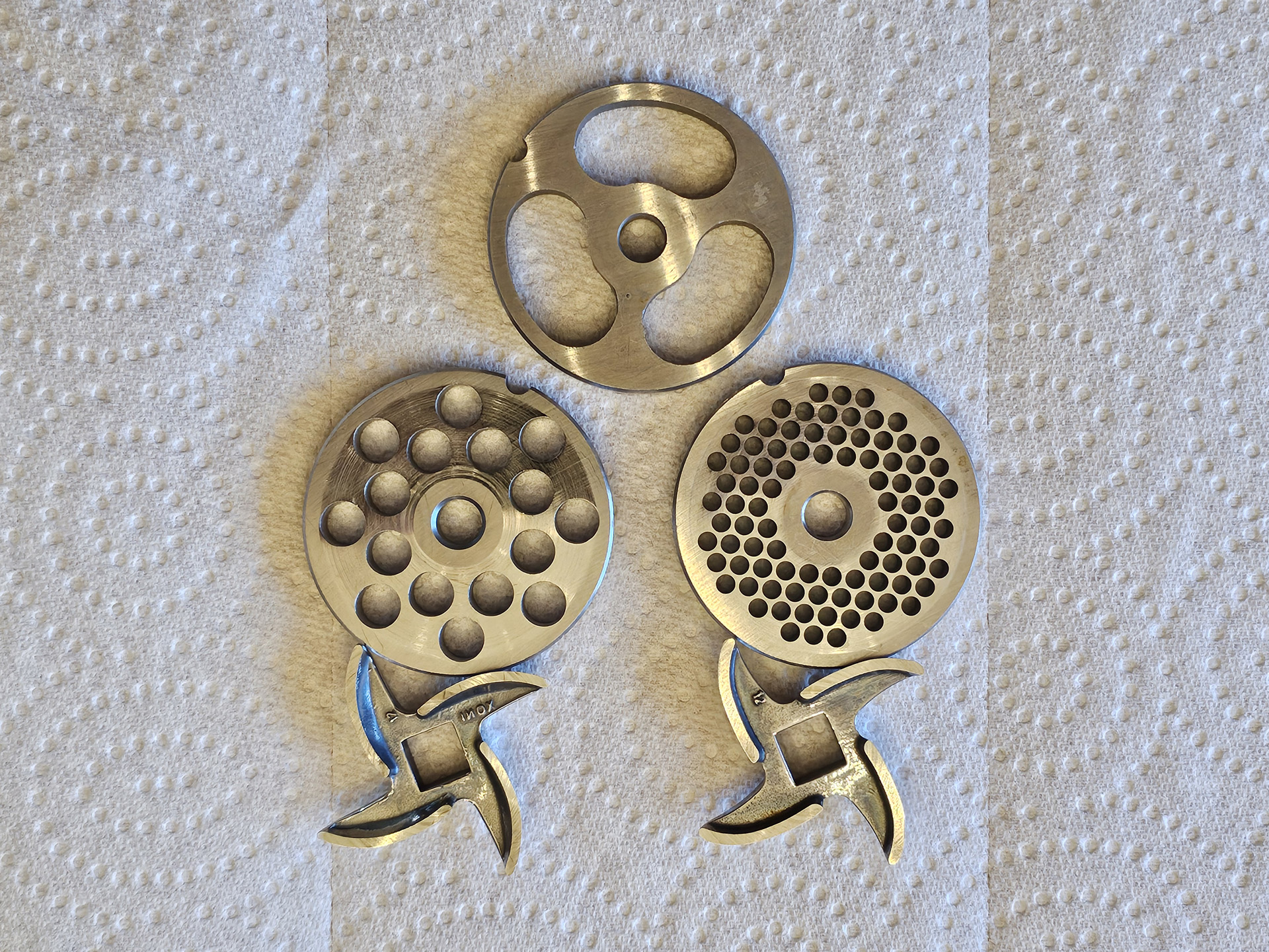
The three grinding discs need to make burger or jerky.
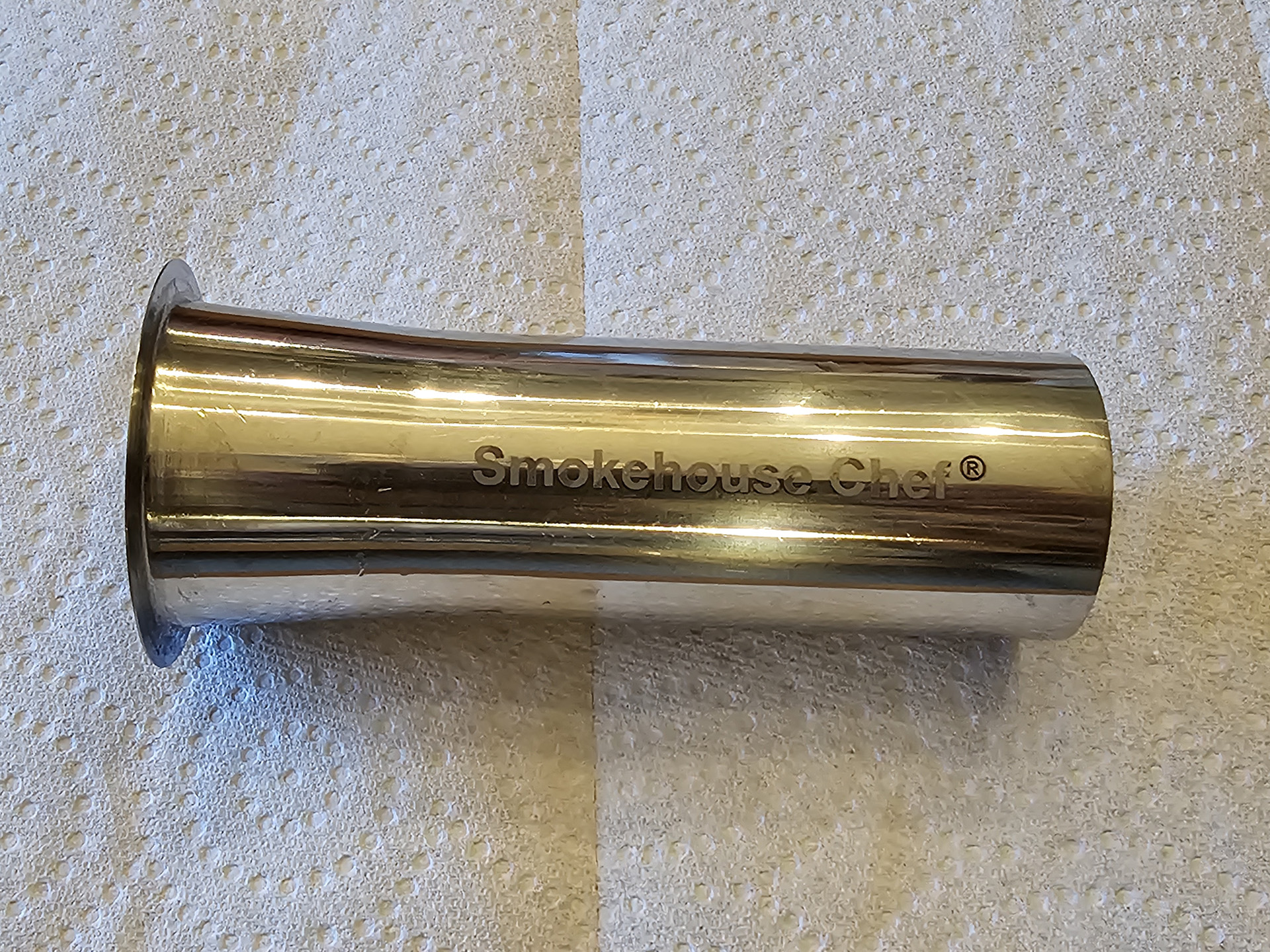
This is the stuffing tube I use to stuff the burger with. The LEM grinder comes with a couple of stuffing tubes but they are all too small in diameter, more for stuffing sausage links sized.
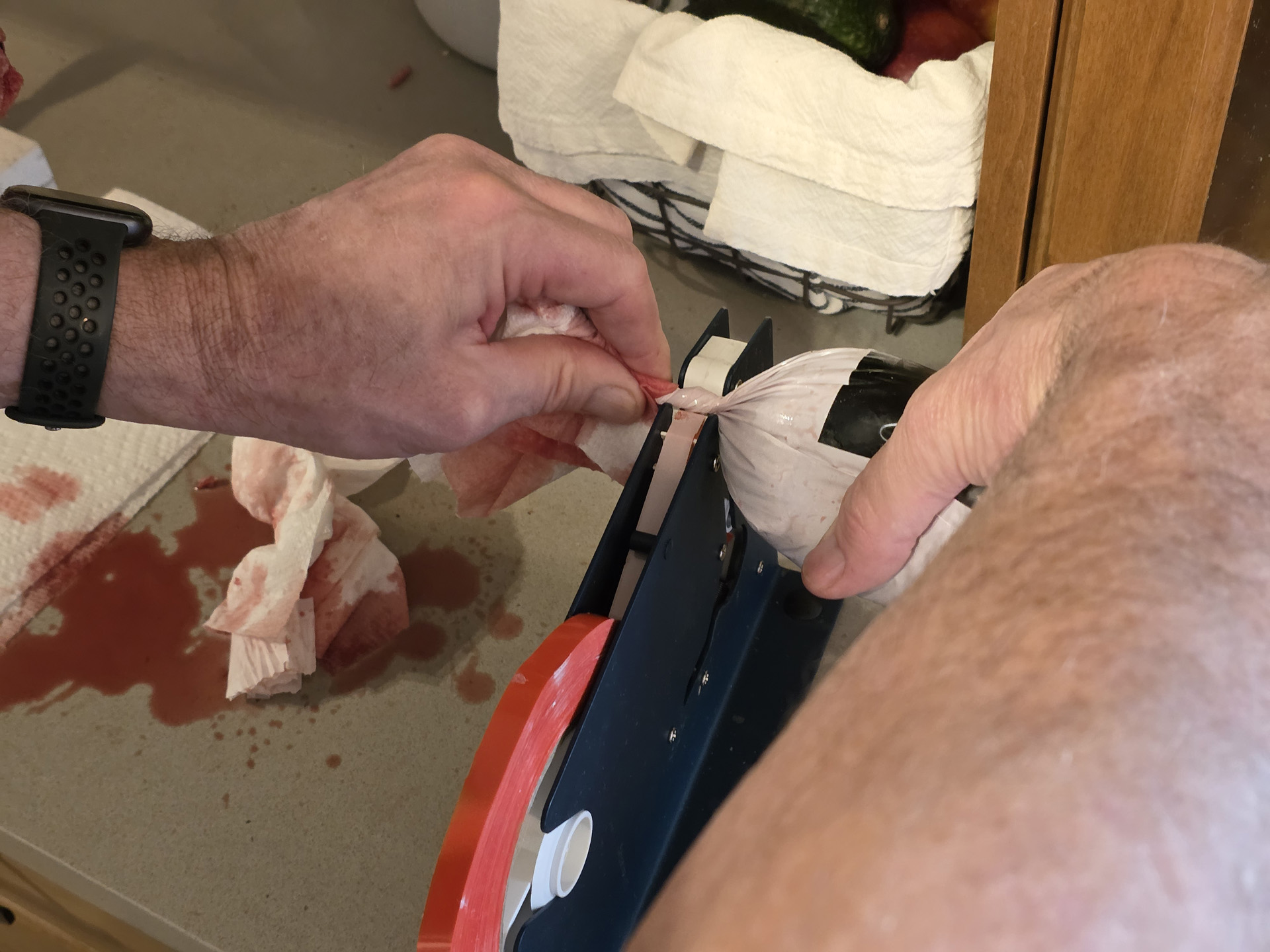
When going to tape the burger package shut, I will wipe the area where the tape is going off with a paper towel to make sure the tape sticks.
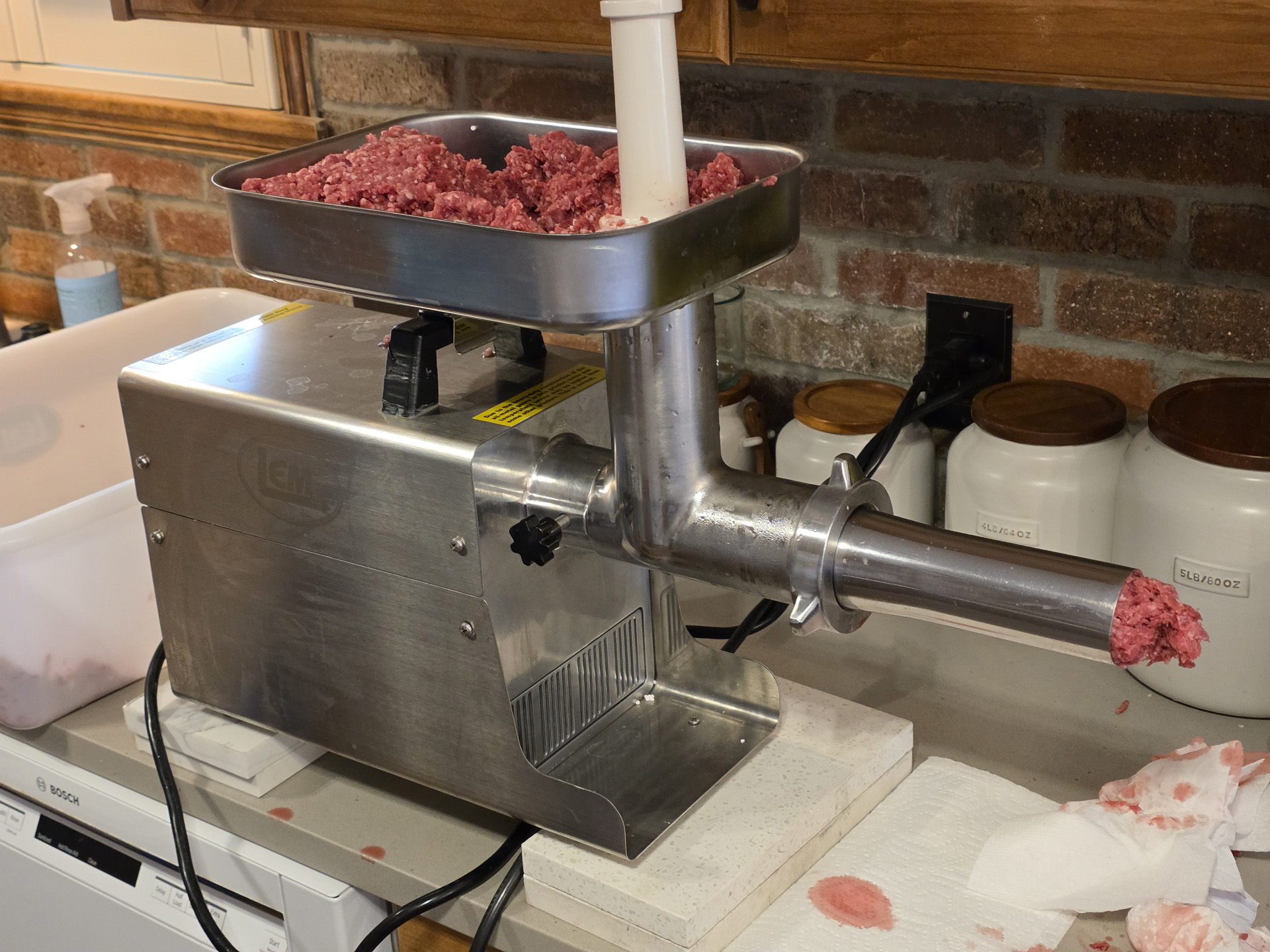
My LEM grinder ready to stuff burger into meat bags.
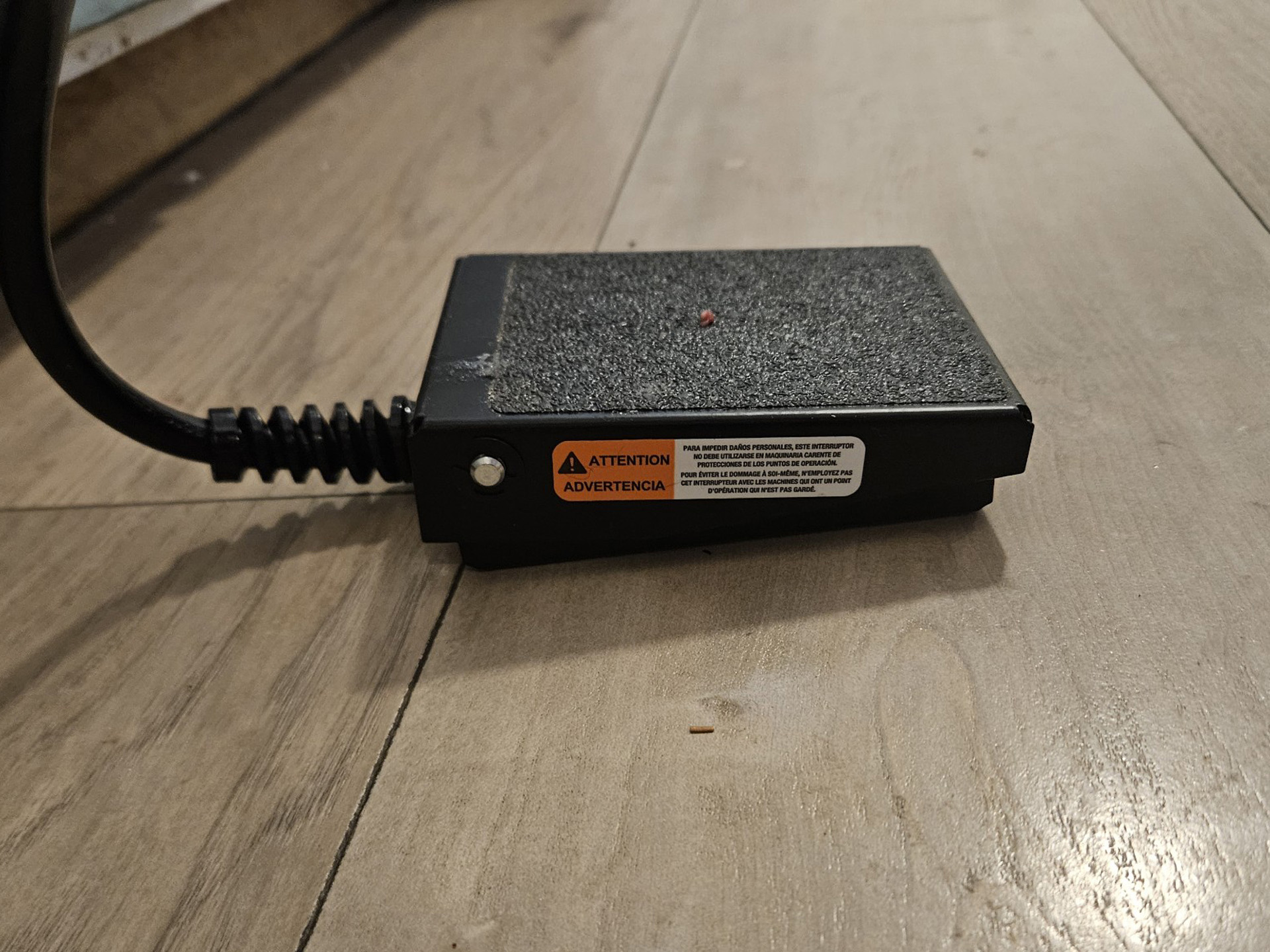
The LEM foot pedal control is a must if you are grinding by yourself.
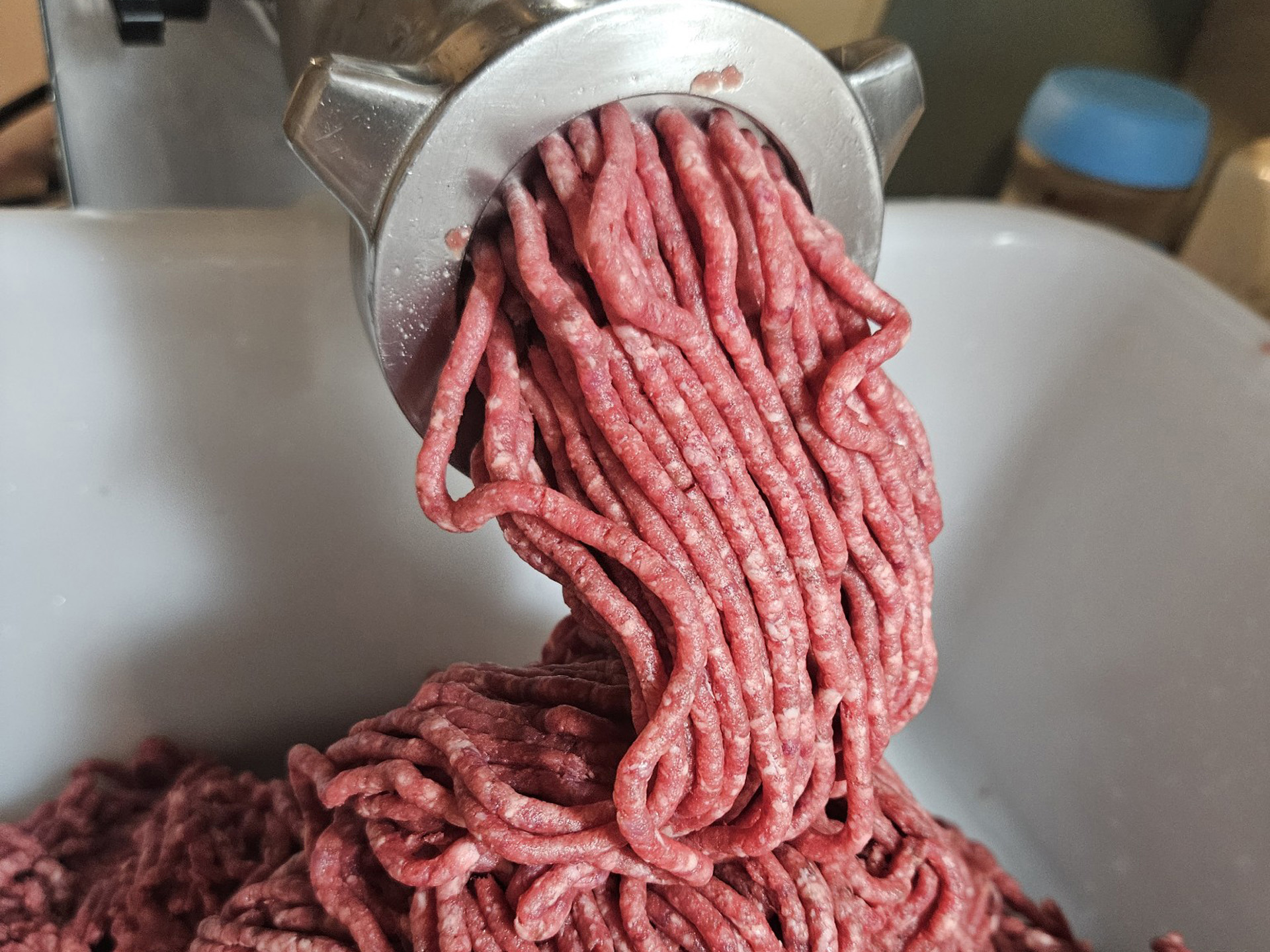
Finely ground deer burger from the 4.5mm fine grinding disc.
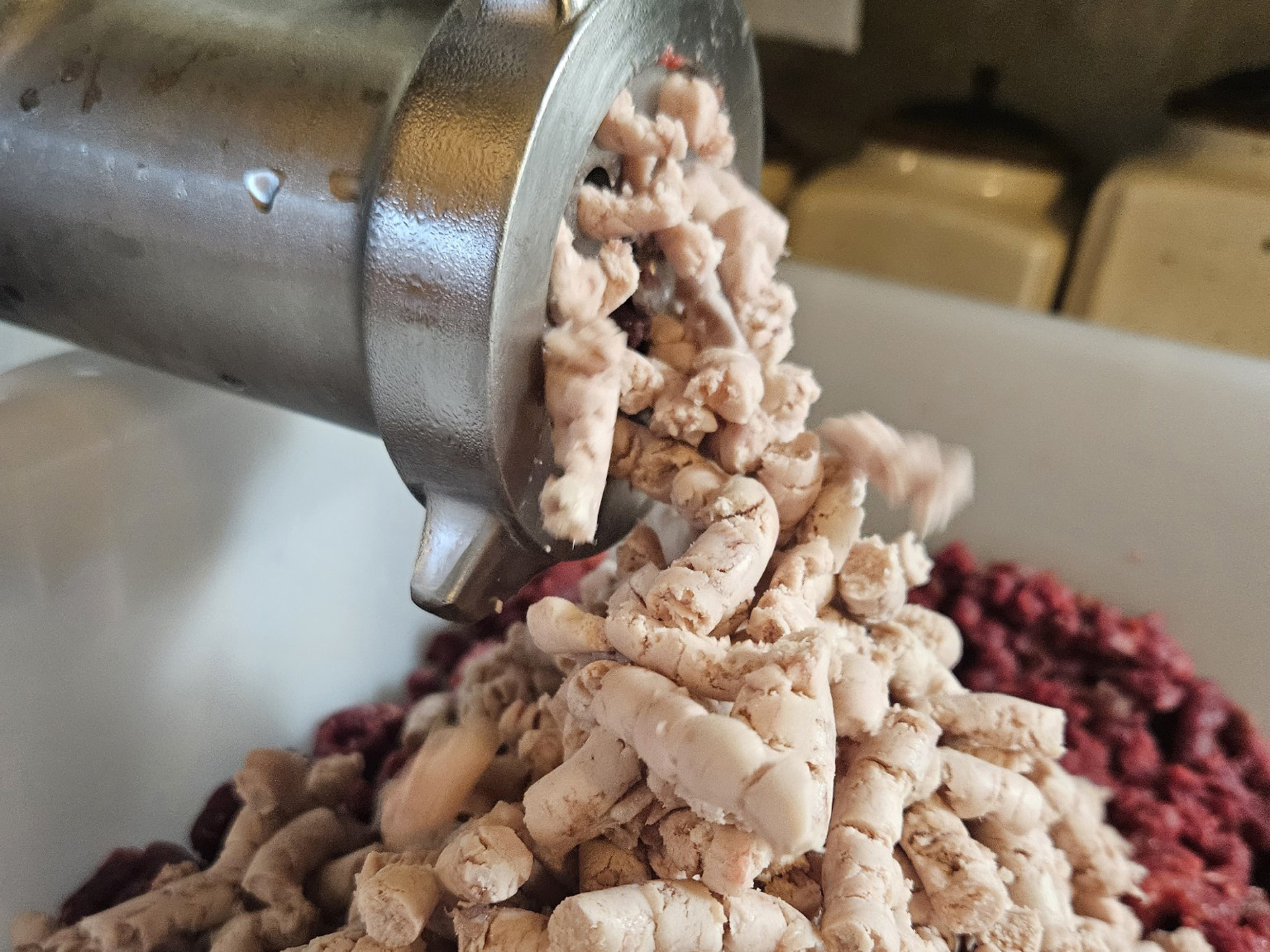
Adding beef fat with the coarse grind to my game meat.
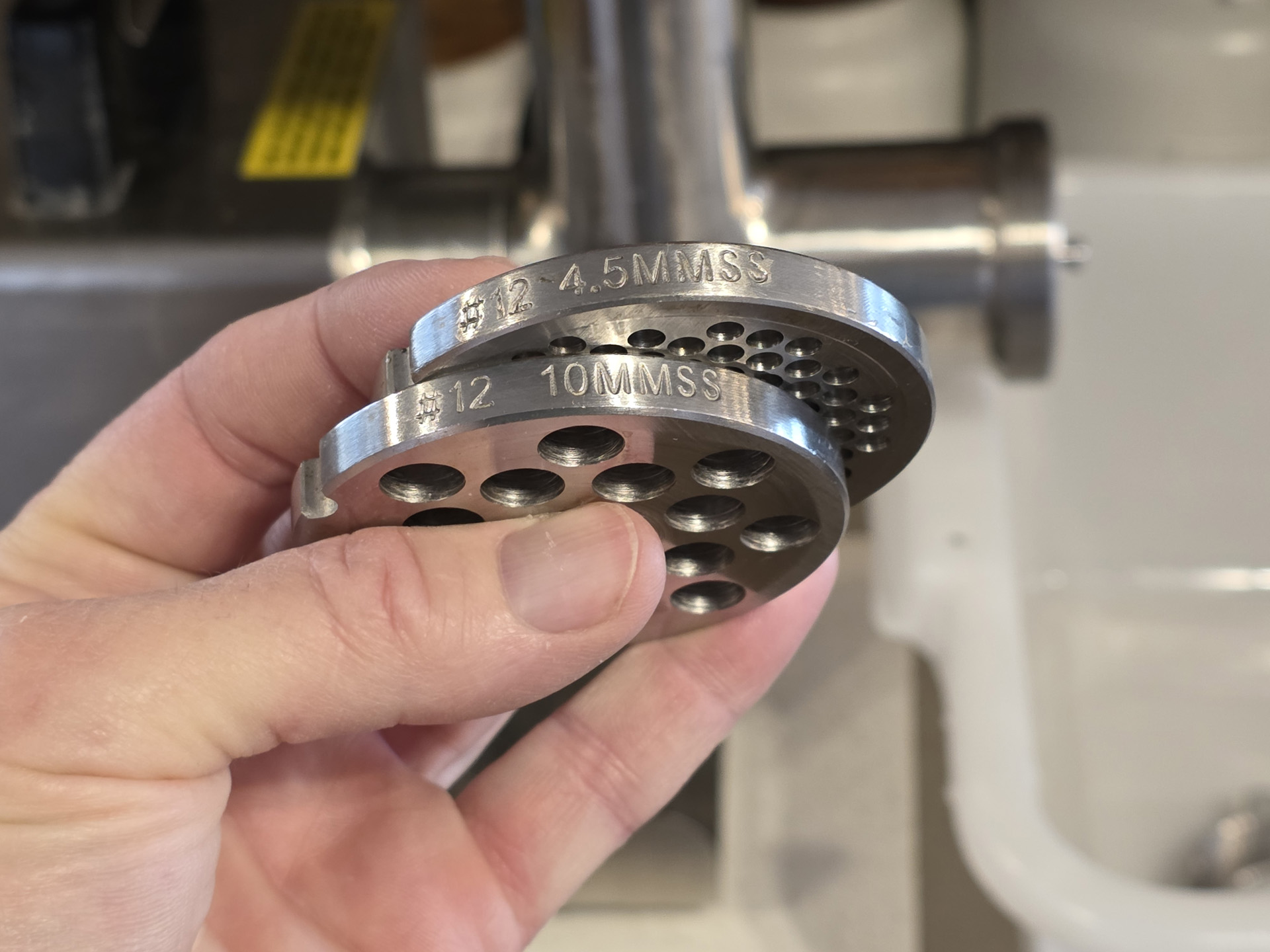
The two grinding discs needed for burger and jerky are 4.5mm and 10mm.